The radio brought something very different to American Mass Media and American culture. It's biggest competitor of the day, the newspaper, could do little to compete with it it's coast-to-coast broadcasting that was ultimately available to anyone who owned a radio. It was the first form of wireless communication, beating out both the telegraph and telephone, allowing information to take form in as a immediate and widespread source of communication.
Once radio began to gain popularity, many people realized its potential. It could not only be used to just for news, but could also be used as a source of entertainment. Modern genres we see today on television, such as soap operas, sitcoms and science-fiction were originally broadcasted on radio stations. Families gathered together to listen to wild westerns and spooky stories come to life. Music genres also began to also expand and spread.
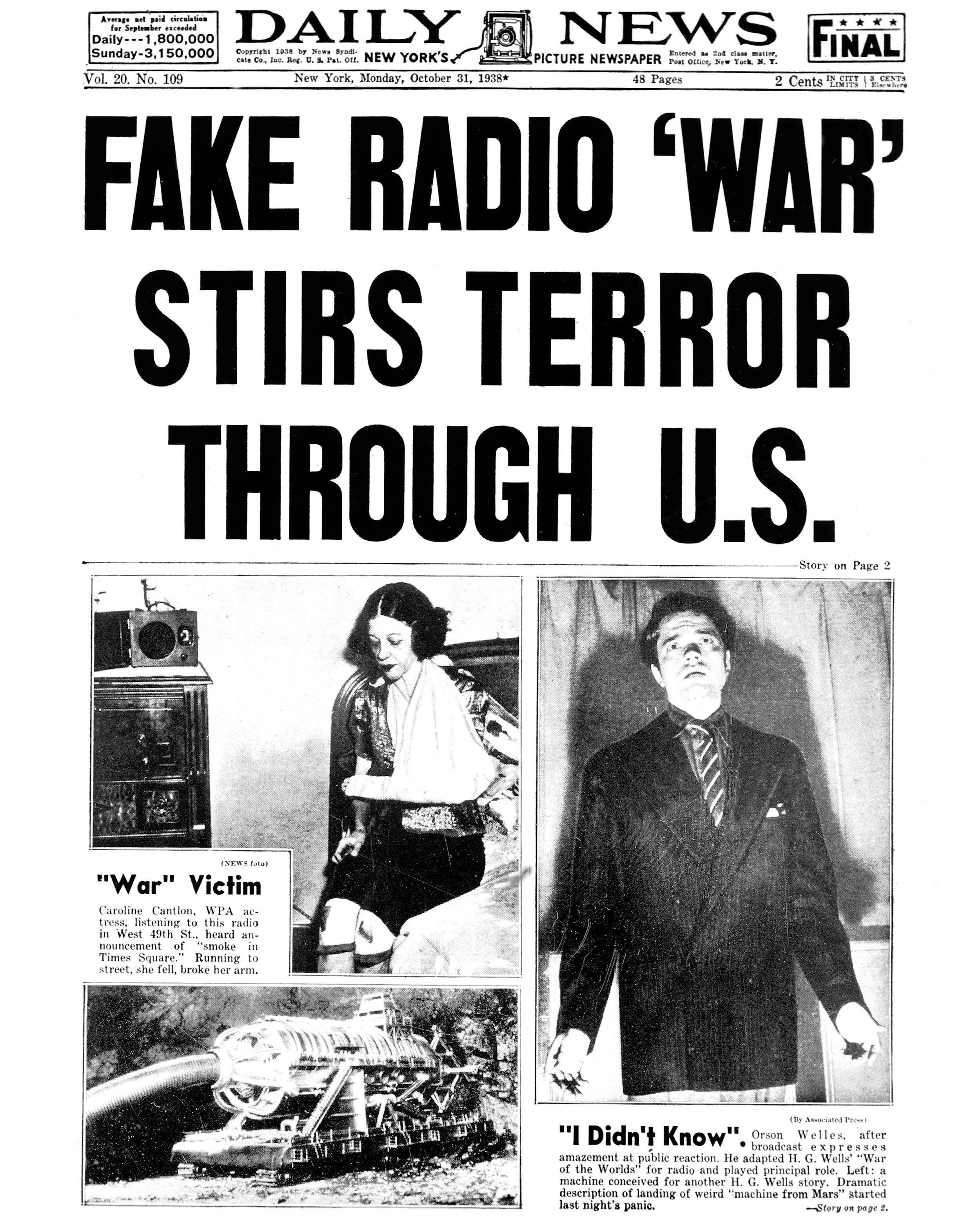
Radio allowed Americans to experience events together, such as FDR's Fireside Chats during World War II. Americans felt a since of unity and camaraderie with one another. A quite humorous story in retrospect is when Orson Wells' War of the Worlds was read aloud over broadcast, and those who didn't tune in from the beginning believed it to be the actual end of the world.
Even after the invention of the television radio had a profound effect upon Mass Media, though it had been slightly modified from it's earlier premise. Television took the radio shows and made them into a visual media, leaving radio with only music. Here it allowed many new styles of music, such as Rock'n'Roll to be heard to a wide range of people.
.
